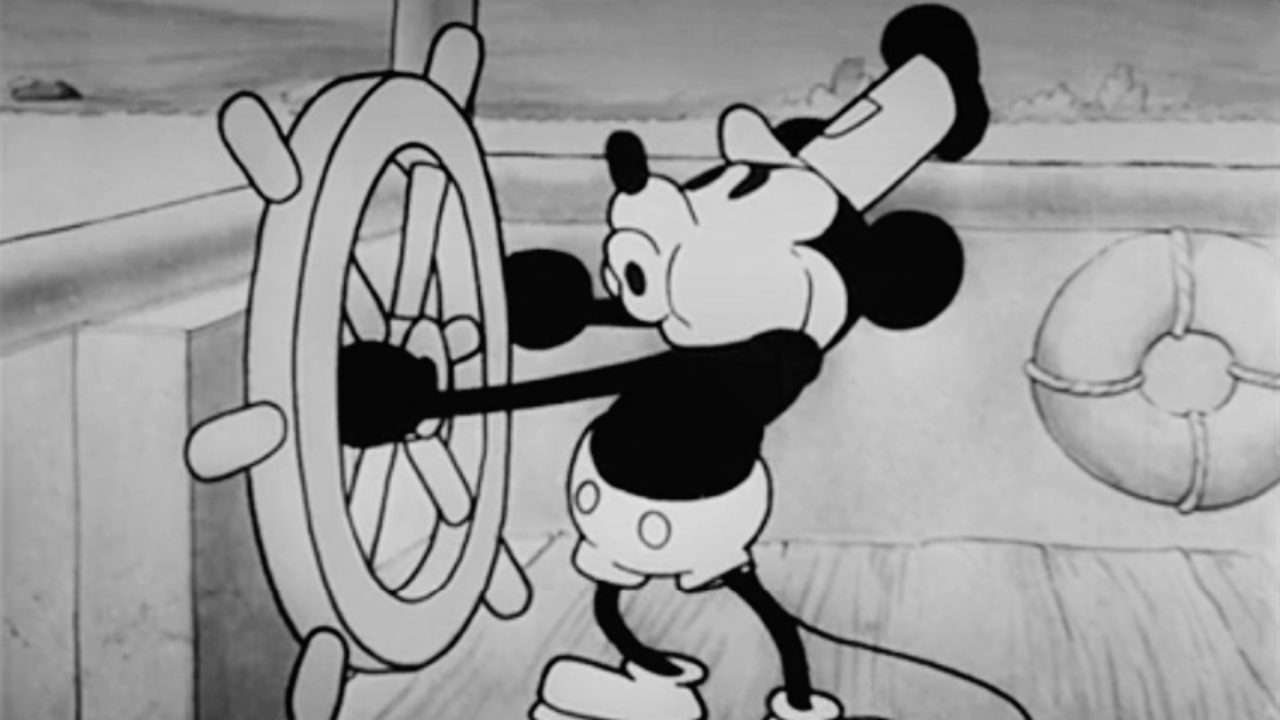

For those who are unaware, Mickey Mouse, Walt Disney’s beloved character who started it all, will officially become public domain on January 1, 2024.
What is the public domain?
The public domain consists of all the creative work to which no exclusive intellectual property rights apply. Those rights may have expired, been forfeited, expressly waived, or may be inapplicable. Some notable examples of the public domain are fairy tales, this is why you see Disney doing a Snow White movie but Universal doing their own with Snow White and the Huntsman, or most recently Disney and Netflix have Pinocchio films on the way this year. Winnie The Pooh entered the public domain earlier this year, however, under the “The Mickey Mouse Protection Act,” Disney would keep their own creations such as Gopher. This is why the Winnie The Pooh horror movie in the works (not by Disney) has no similarities to the Disney version. This same protection will apply to Mickey Mouse.
Mickey Mouse Copyright Background
We all know Mickey Mouse made his first appearance in the silent short Steamboat Willie in 1928. The copyright law at the time protected the film, and thus the character, for 56 years, until 1984. In 1976, Congress passed the Copyright Act of 1976, which extended copyrights for works to be 50 years after the creator’s death or 75 years after the creator’s death if the creator created the work for his/her employer. This ultimately protected Mickey’s copyright for an additional 20 years to 2004. The most recent extension to this copyright was through the Copyright Term Extension Act of 1998 which made it so works owned by individuals were protected 75 years after its publication and works created by an individual for a corporation were protected for 95 years after its publication or 120 years from its creation, whichever comes first. This once again extended Mickey’s protection another 20 years to 2024.
What happens next?
Well, to be honest, nothing major happens next. The only iteration of Mickey Mouse imagery that enters the public domain is his look from Steamboat Willie and can be freely used by the public. Mickey Mouse has seen a number of changes in 90 years. The Mickey Mouse we all know and love today is still protected by copyright but is set to also enter the public domain in 2031.
Disney still owns Mickey Mouse trademarks
Although the imagery for Mickey Mouse will end up in the public domain, The Walt Disney Company still owns the copyright and trademarks for the Mickey Mouse name and thousands of symbols associated with the character, trademark protections last as long as Disney continues to use Mickey Mouse as a company logo. If anyone decides to use the Mickey Mouse that is in the public domain it cannot be used in any way that would imply to the consumer that it is associated with Disney. If someone uses the Mickey Mouse imagery in a way that people will think of Disney, in theory, Disney could say you violated their trademark.
Check out our friend Dave Lee’s great video on the evolution on Mickey Mouse below:
Discover more from The DisInsider
Subscribe to get the latest posts sent to your email.


