
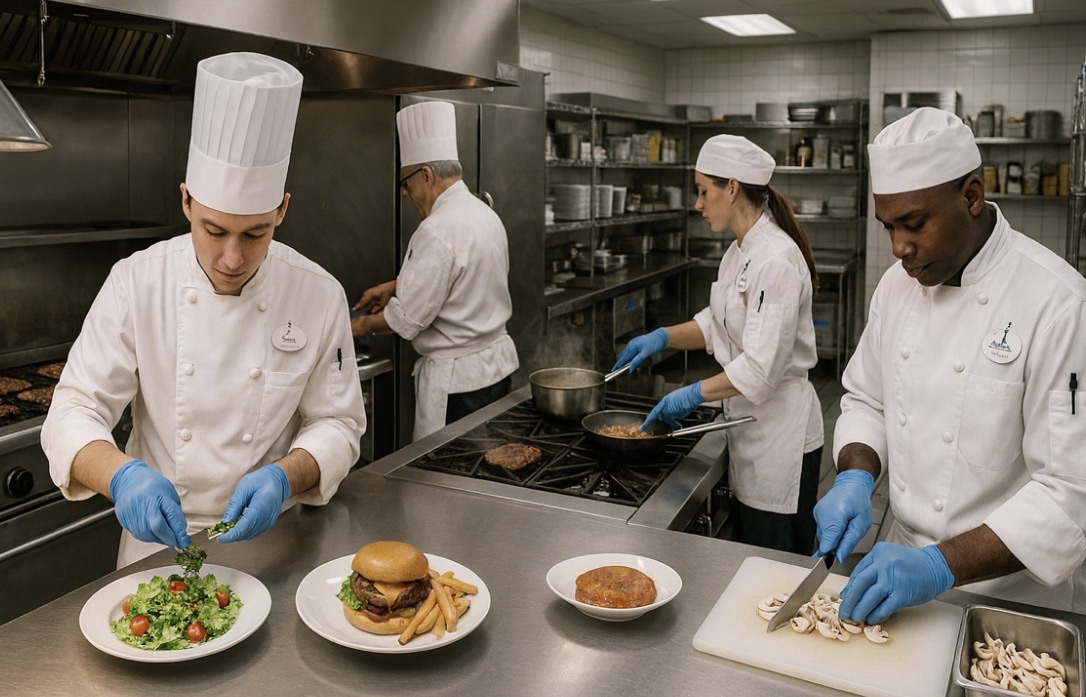
If you’ve ever stood in a 45-minute line for a Mickey-shaped pretzel and wondered how in the world these parks keep feeding tens of thousands of people without collapsing, the answer is simple: Disney kitchens run like small cities.
What you see at the counter is the tip of an iceberg that stretches through basements, alleys, prep tunnels, and giant commissaries humming before sunrise. Most guests never think about the machinery behind their meals—they’re focused on the fireworks, the characters, the churros. But the food system is its own kind of show.
The Hidden World Under Your Feet
Every park has one or more central commissaries that act like giant prep hubs. Picture a warehouse where teams are breaking down pallets of produce at 4 a.m., roasting meats in tilt skillets the size of bathtubs, and portioning sauces in assembly-line rhythm, supported by Restaurant Supply equipment and other online store options built for heavy daily use.
These commissaries supply dozens of restaurants and snack stands, each with its own menu quirks, allergy protocols, and theming demands. Staffers joke that the only way to truly understand Disney food service is to walk the tunnels once and hope you don’t get lost.
Disney didn’t invent this system, but they perfected it.
HACCP: The Quiet Backbone of the Magic
Behind the scenes, cooks aren’t just flipping burgers; they’re following HACCP protocols so closely it starts to look like choreography. Temperature checks. Cooling logs. Sanitizer rotation. Labeling that would make an archivist blush. Everything moving from “raw” to “ready” follows a strict flow so nothing gets cross-contaminated.
It can feel rigid, but when you’re feeding a small town’s worth of guests, structure is the only thing keeping the system upright—the same kind of behind-the-scenes precision fans never see unless they’re watching Disney+ or Hulu deep-dive specials.
The Cooklines Built for War
Once food reaches the actual restaurant kitchens, the pace changes. Commissaries do the heavy lifting; cooklines handle the finishing touches—searing, frying, assembling, garnishing, plating. These lines are designed for volume and speed: oversized flat-tops, double convection ovens, fryers that never cool down, and prep tables loaded with inserts full of toppings and sauces.
It’s the kind of high-energy chaos you’d expect to see highlighted in a new Disney promo about what keeps the parks running.
Lose a fryer during lunchtime at Cosmic Ray’s? That’s a crisis.
Gear Built for Abuse
Theme-park kitchens are basically endurance tests for commercial equipment. Everything runs hot, long, and hard. Refrigerators open hundreds of times an hour. Flat-tops stay on all day. Pans get rotated through dishrooms like they’re in competitive sports.
And because readers often want to dig into what “commercial-grade” really means outside a park setting, you’ll want to explore specs for the same kinds of ranges, reach-ins, prep fridges, and storage pans based on informational resources with straightforward product details, online reviews, and comparison charts.
The Lifecycle: Use, Abuse, Retire
Equipment in Disney kitchens has a shorter lifespan than in most restaurants—not because it’s cheap, but because it’s used nonstop. A reach-in fridge in a typical bistro might see a few dozen door openings per service. A reach-in in Adventureland sees that in five minutes. Pans warp.
Gaskets fail. Burners corrode. Maintenance crews rotate through constantly, swapping parts before something breaks at the wrong moment.
Why You Never See Any of This
Disney designs their parks so the magic stays front-of-house. Guests get the music and theming; employees get a labyrinth of service corridors lined with hotboxes, dry-storage racks, and people sprinting with carts of Dole Whip mix. It’s controlled chaos, but everyone knows their lane.
But the magic depends on the mayhem you don’t see.


Leave a Reply