
Before the era of cinematic universes, reboots and re-quels, a trilogy was considered to be the hallmark of every major franchise. The formula was simple. A film’s first sequel would amplify the stakes for our characters, while expanding its universe and lore. The third film in the series would serve as the ultimate send-off, drawing all of its arcs and themes to a conclusion. Few franchises succeeded at satisfying their audiences, but the ones that did became classics (Star Wars, The Godfather, The Lord of the Rings). While it’s still rare for a franchise to stick its landing, it’s even rarer to see a trilogy where any of the sequels were better than the original. Over the last few years, films like The Dark Knight and Bad Boys For Life have proven it’s still possible. Now, yet another film joins that list – and it’s one from a franchise that hardly needed to raise the bar at all.

Avatar: Fire and Ash is the third film in James Cameron’s original epic science fiction series. Yet it’s the first time the series feels boundless. Where the other entries have always felt derivative of other genre films and contrived to set up certain events, here the film feels like Cameron is content with the sandbox he’s built and just wants to play. And the way he ups the ante with the action, imagery and ideology blows both of the film’s predecessors out of the water.
READ: How Disney Is Secretly Speeding up Animation in 2025 Using AI
The film picks up one year after the events of the last film. Jake and Neytiri’s family is still grappling with the loss of their oldest son. And the villainous Quaritch has amplified his search for the clan because his own biological son, “Spider,” still dwells with them. Just as the family prepares to separate from “Spider: for both his and their own safety, a new Na’vi tribe, known as the Mangkwan clan (or “the Ash People”) arrives. But when they join forces with Quaritch, a new conflict unfolds which threatens the future of Pandora and the Na’vi race forever.
While Sam Worthington and Zoe Saldaña are the film’s undisputed leads, this entry is undoubtedly defined by its supporting cast. Despite playing the role twice before, Stephen Lang brings a new tenacity to the role of Quaritch in this film. Here, he’s sharper, funnier and surprisingly easier to empathize with. James Cameron had previously gone on the record stating that the character’s soul was “very much in play” this time around. And that is the only way to describe his arc in this story. Although he is the film’s main antagonist, there are moments where you really can feel him wanting to betray his human instincts. There’s even a sequence teasing what it might be like to see Jake and him fighting on the side. Nevermind any visual effects because the real thematic spectacle is seeing the character become the rope in the tug of war between Jake’s clan and the “Ash People,” and try to pick a side.
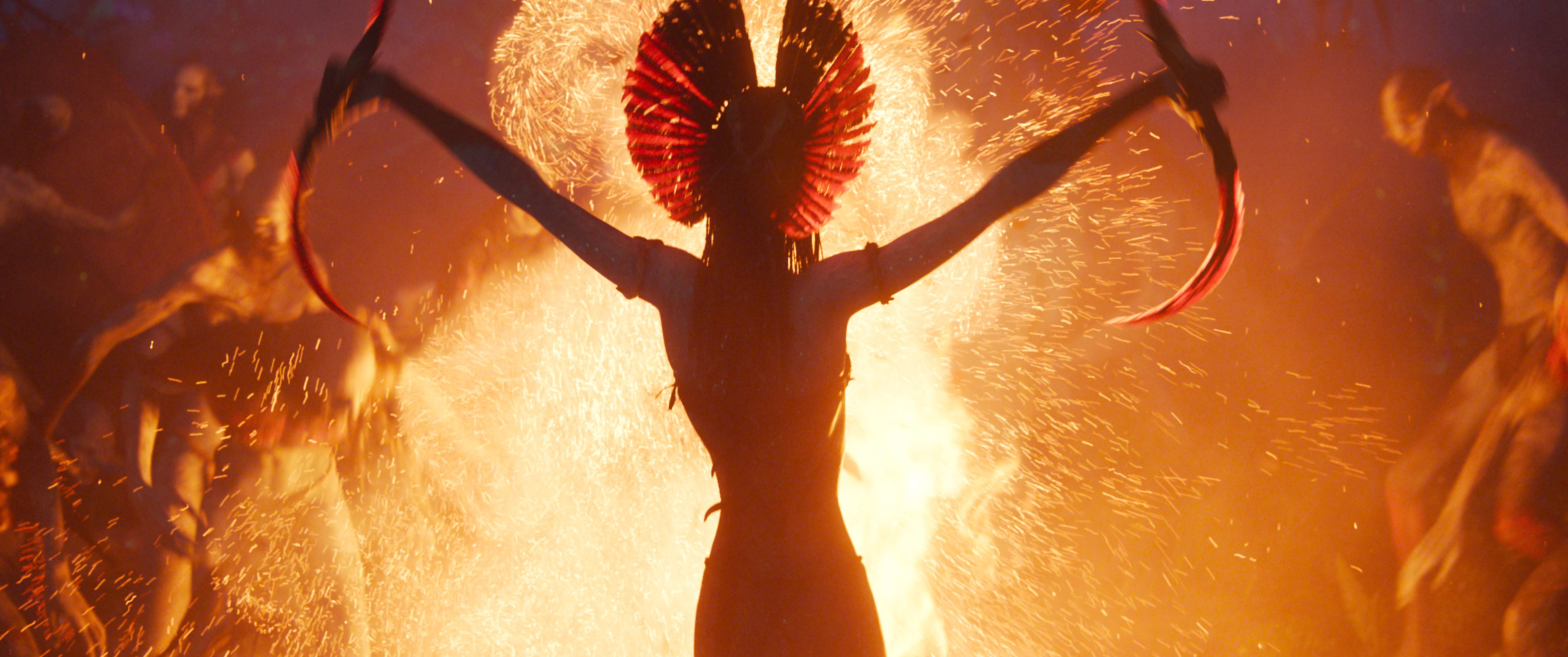
The leader of the Mangkwan, Varang, is another one of the film’s bright spots. Equipped with the moral ambiguity of Heath Ledger’s Joker and the ruthless ambition of Cersei Lannister, she steals every scene she’s in. The Game of Thrones connection doesn’t end there as former star Oona Chaplin devours the role. Having previously played the sweet and innocent wife of Robb Stark in the series, her turn here is both shocking and impressive. Set up to be an obvious foil for Quaritch, she sets the film ablaze and ignites some wild chemistry with Lang in the process. While we see the chaos she’s capable of early on, she’s so mesmerizing, you’ll find yourself wanting to see how much further she’ll go even if it’s at the expense of some of the other main characters.

SEE IT: The First Poster, Trailer For ‘The Devil Wears Prada 2’ Strut Online
Most surprising is the film’s arc with “Spider.” After being set up as a burden for both Jake and Quaritch in The Way of Water, the character actually becomes quite crucial to the story in this film. As he continues to decide where his allegiance truly lies, a near-death experience paves the way for him to become the first-ever human/Na’vi hybrid. This forces him to reexamine his place on Pandora and pushes the boundaries of what even the audience imagined as what was possible in the franchise. The film’s execution of the concept is cool. As is its brief scientific explanation about how it’s even possible. And while the plot point answers some long-gestating questions about what it might look like to see the two races coexist, it is also one of the few aspects of the film that feel redundant. All three of the Avatar films have been commentaries about humanity’s relationship with nature after all.
That’s not where the redundancy ends. Similar to The Way of Water, there is a lot of drama involving Pandora’s whale-like species, the Tulkun – like entire sequences where these creatures speak with each other. It’s both fascinating and bizarre, but ultimately the best time for you to go to the bathroom.

Despite one of their children dying in the last film, in many of the biggest action scenes, Jake and Neytiri’s kids are still left to fend for themselves here. Without giving too much away, the setup and execution of the film’s climax is also extremely similar to the first two films. Some eagled-eyed Catholics may even recognize that there’s at least one entire sequence in the film directly lifted from the Bible. Even with all of that in mind, this is still the best of Cameron’s trilogy.
READ: 20th Century Announces New ‘Simpsons’ Movie, Coming In 2027
Standing at a gratuitous 3 hours and 17 minutes, the film is edited so well – and carried so swiftly by Simon Franglen’s stellar score – time flies by. Russell Carpenter’s crisp cinematography is also so engulfing that you’ll feel like you’re standing on the shoulder of the Na’vi on Pandora. But neither the technical aspects nor the narrative aspects are the reason this film burns so bright.
As previously mentioned, the best trilogies end with great send-offs to the characters and themes. Though the film isn’t perfect, though there are still many questions left unanswered by the time the credits roll, though there are at least two more films in development, the film still functions as the ultimate send-off because it is the perfect culmination of the previous films.
It also feels like a send-off for Cameron too. Given the recent passing of longtime partner and producer Jon Landau, there’s no doubt that Cameron knows he may not be around to finish the series. And the film’s scale is so extravagant at times, you can’t help but wonder if he’s pouring every bit of energy he’s got left. Whether this is Cameron’s swan song, or whether it is the end to Jake’s story, Avatar: Fire and Ash should be remembered as the fiery film of the series so far.
Avatar: Fire and Ash hits theaters Friday, December 19th!


Leave a Reply