
Sequels are always a risky proposition, but I’ve learned to trust Pixar when it comes to Toy Story. Many of us who were toddlers for the original two films were terrified that the third and fourth films, released 15 and 24 years after the original, would disrespect the legacy of the franchise. Luckily, I feel that the opposite has happened. Both of those later sequels, the third film in particular, are brilliantly beautiful extensions of what made the original such a special, influential piece of animation history in the first place. They haven’t tarnished Toy Story’s legacy, only reinforced it for future generations.
Toy Story 5 continues that trend. While I believe that it is the weakest film in the franchise, that is far from a diss, and this fourth sequel recaptures a lot of the magic that make these movies so successful. It’s become clear that Pixar is not going to force new Toy Story movies unless they have a good idea for it. It’s a refreshingly disciplined approach when a billion dollars is on the line. Pixar vet Andrew Stanton takes over as primary director and writer (he’s assisted in both departments by senior creative team member McKenna Harris). Stanton’s Pixar resume, headlined by Finding Nemo and Wall-E, was more than enough to convince many that this was going to be good, and Toy Story 5 thankfully lives up to those expectations.
The backbone of each Toy Story movie comes from its exploration of an existential crisis. Obviously, the first film is about Buzz (Tim Allen) and his realization that he is not actually a space ranger. Toy Story 2 is about the importance of toys as playthings, not antiques. Toy Story 3 is about what happens when someone you love grows up and moves on. Toy Story 4, to counter anyone who says that movie is “pointless,” is a direct response to the third film, challenging Woody (Tom Hanks) and making him confront a life without Andy. Toy Story 5’s crisis is one that will hit home for parents and children alike—the rise of technology and the slow decay of adolescent socialization. It’s an excellent hook, and one that Stanton takes advantage of with great comedic and emotional ability.

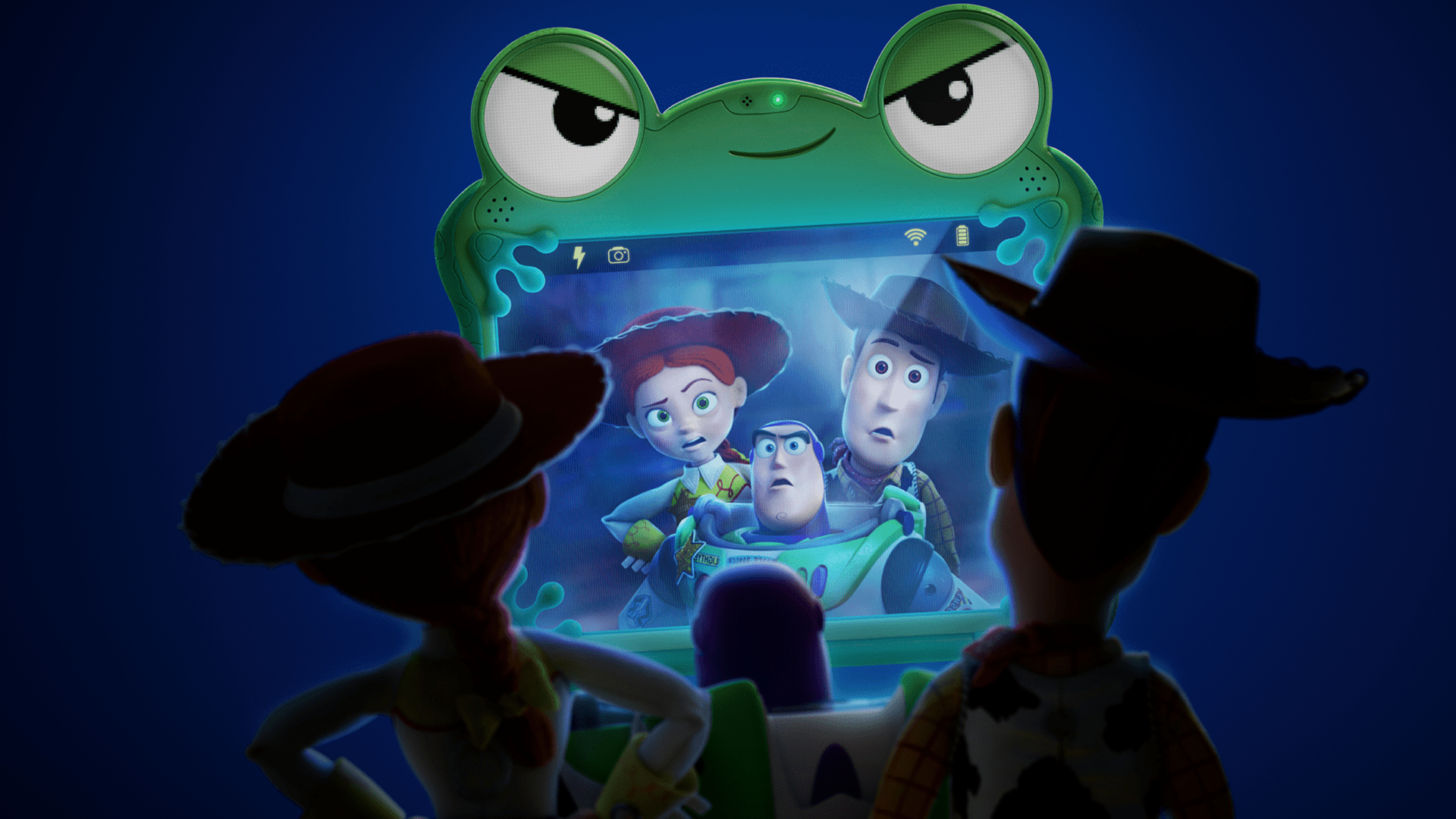
When the toys were left with adorable little Bonnie (Scarlett Spears), they got lucky. She’s one of the only kids her age who seems to remember the importance of playtime, and how special that can feel. The “pretend” sequences are always some of the most visually exciting Toy Story moments, and Stanton’s animators make those fantasy sequences look like a Crayola drawing come to life. But Bonnie’s seemingly the only kid who actually wants to play. Others her age are glued to their screens. Bonnie’s parents try to cure her shyness with a new Lilypad (Greta Lee, pretty good), who uproots playtime with her various apps and limitless possibilities. Toys are out and online gaming is in, and the toys need to react before it’s too late.
Toy Story 5 rectifies a few specific details that certain sections of the audience took issue with in Toy Story 4 (not myself, to be clear). The first choice was to place Jessie front and center in the plot. She was really important to the narratives of both the second and third films, and while I understood why the fourth movie didn’t have much room for her, she’s the only one of the main characters that hasn’t had their full moment of growth. Toy Story 5 evokes a lot of the best moments of Toy Story 2, and finds new ways to explore Jessie’s abandonment by her original owner Emily. Though I worried that there was going to be a feeling of “been there, done that,” Stanton and Harris’s screenplay tie it all well into the themes of this story. It also helps that Joan Cusack, at 63 years old, remains as charming as ever in the role.
The second of those specific choices is to pair Woody and Buzz for large stretches of the film. This is a unique Toy Story film in that these two beloved characters are true supporting players. That has never been true before, and Hanks and Allen seem to be enjoying the freeness of what amounts to purely comedic performances. It’s been a while since Woody and Buzz have bickered like this, and the movie has fun with how both of them have gotten a little older. Allen in particular still has plenty to do, particularly with an amusing subplot involving dozens of high-tech Buzz Lightyears who force their way into the action.

As with all Toy Story films, the new supporting characters are the highlights. As much as I lament the diminished roles of fan-favorites like Mr. Potato Head, Slinky, Hamm and Rex, it makes sense both in the story and the fact these original voice actors are either dead or aging. Conan O’Brien voices the best of the new characters as Smarty Pants, a toilet training electronic whose low battery mimics intoxication. Craig Robinson and Shelby Rabara are also good as other obsolete electronics that Jessie encounters in her adventure.
A fan favorite element that does return in full force is Randy Newman’s score. At 82 years old, Newman has not lost a single step, and I still get chills hearing a lot of the classic Toy Story themes. For those curious, the new Taylor Swift song fits the Newman aesthetic well, though I would not exactly consider it an integral part of the film.
The Pixar film that Toy Story 5 most resembles is Inside Out 2. That was another welcome, if slightly inferior, sequel that grappled with maturation and change in a way that was clever and poignant. For those who think it’s a bit rich for a Disney-production to wag its finger at the audience for consuming too much on their screens, Toy Story 5 makes it clear that it’s less about the screens themselves, but how they’re used. There will be plenty of post-movie conversations between parent and child about cyberbullying and the importance of being kind. For those conversations alone, Toy Story 5 is worth the wait. It is almost a bonus that it’s just a really good sequel as well.
Toy Story 5 is in theaters everywhere this Friday.
Discover more from The DisInsider
Subscribe to get the latest posts sent to your email.


